Mobile App Development Process From Start to Launch
Got an App Idea? But that’s not enough.
Having an app idea is easy. But turning that app idea into a product that users rely on and growing the business in a field where most businesses fail.
In the market, there are thousands of apps launched every month. But only a fraction of them turn out to be effective and get meaningful value. Why? Because the difference between a working app and a successful app lies in the process of developing it.
Whether you are a business trying to have a streamlined approach for internal operations or a startup building its first product, a connection with a mobile application development agency will make more sense. Because mobile app development is not just about writing code.
It is more about the process of adding various features like from planning UI/UX to testing and accessing the long-term support, everything is important. If a single step is issued, then it will result in user drop-offs, negative reviews, or months of rework.
But when the app development process is done right, a well-developed app does not just function properly but delivers better value, builds loyalty, and creates a measurable impact.
This guide will walk you through every single step of the app development process so that you avoid the costly mistakes and build a product that works for both your users and your business.
What Is Mobile App Development and Why Does the Process Matter?
Mobile app development is the process that refers to the structured creation of software applications that are specifically designed to run on mobile devices like smartphones and tablets.
This app development process includes everything from defining the app’s functionality and designing its interface to writing code, integrating APIs, and testing performance across platforms like Android and iOS.
But mobile app development is not just about building an app that works. It is about building the one refined application that works well for your users and your business.
That is why maintaining the app development workflow is important.
Without a clear process, even a strong app idea can fall short. Unclear goals, rushed decisions, or skipped testing stages can often lead to slow running of the app, unstable processes, or failure in meeting the user's expectations.
A defined mobile app development process helps you to avoid these issues. It aligns with the vision of your business for technical decisions, ensures smoother collaboration across design and development teams. This can also reduce the risk of a last-minute rush to avoid any possible delays or overspending in terms of cost.
More importantly, it allows you to launch with confidence, knowing that each stage has been executed with proper purpose and precision.
Whether you are building your first app or scaling an existing one, a structured development approach gives you a clear presence in delivering reliable and user-focused services.

8 Essential Steps in the Mobile App Development Process
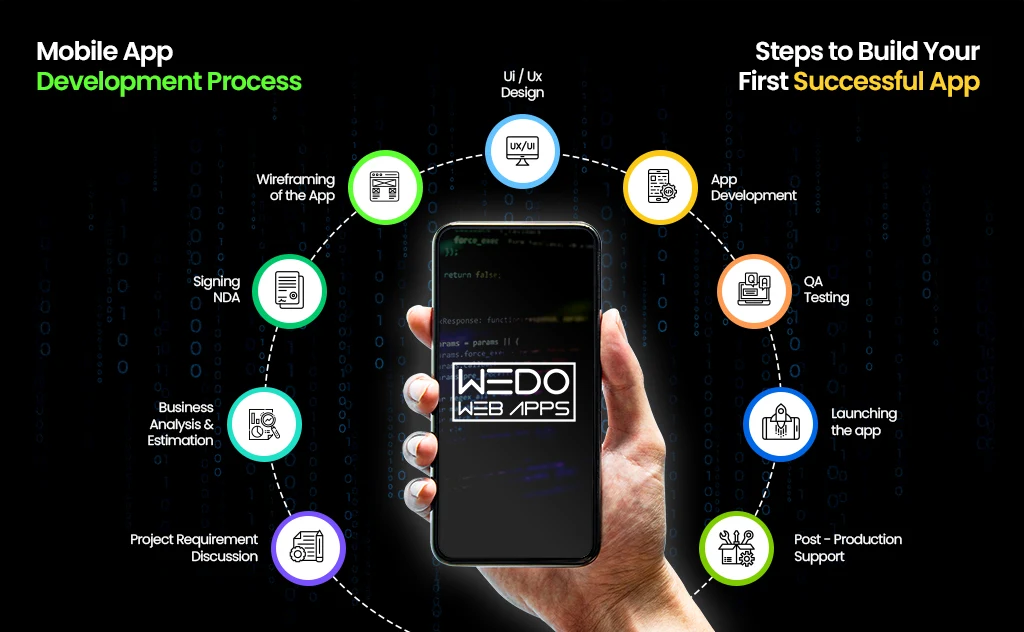
The success of a mobile app depends more on the process than the great idea. It depends on how effectively that idea is turned into a working product. Each phase of the mobile app development process plays a significant role in ensuring that the final outcome is functional.
The steps discussed here are the mobile app development process steps that every business should follow to know how a right app development partner is supposed to work on a project.
This is not just a checklist, but it is a simple and practical approach towards the app development workflow to reduce pressure, minimize risks, and keep the development process on track.
Here’s a breakdown of the eight core steps that define a reliable app development workflow:
Step 1 - Know the App Idea and Set a Clear Objective
Every app should solve a specific problem or serve something that has a purpose. This is the first stage, so you need to maintain the focus on identifying “why” behind your app.
Understanding your target audience and outlining the need of essential features needed to deliver value.
What details do we expect from you as an app development company?
- What does the app do?
- What kind of problem does this solve?
- What is your budget for the application development?
- What kind of application do you want? Android or iOS?
- What is your timeline for app development?
A clear answer to these questions early will help in preventing the misalignment and set a strong foundation for the next step.
Step 2 - Market Research and Platform Selection
Great execution of the process starts with proper research. Studying about the competitive market, identifying the market gaps, and understanding the user’s behaviour helps to make an effective step and be clear about the core concept.
This also includes selecting the right platforms, like you want to build the app for iOS, Android, or cross-platform, based on your targeted audience and budget. A well-informed choice will help you save time and cost in the mobile app development process.
Step 3 - Wireframing and UX Planning
Before you start preparing the application, make sure that you prepare the outline for the application first. Wireframes and flow charts help you to visualize how the user will navigate the app, how the screen connects, and where the critical actions like sign-in or payment take place.
Planning the design of an app before development begins is an important part of the app building process. Allow the development team to align user goals while meeting the technical feasibility early in the process.
Step 4 - UI Design and Prototype Creation
Once the structure is prepared and approved, you can start with the design phase, which is UI/UX preparation. This includes various tasks from selecting the color to handling the layout of the application.
Your goal should be to maintain a seamless and better user experience. Many businesses have built a strong app but are unable to meet the expectations, so the design is essential when it comes to moving forward with the full development process.

Step 5 - App Development (Front-End, Back-End, APIs)
After all these initial discussions, the next and main steps come, which are app development. Mobile application developers build both the frontend, which includes user-facing features, and the backend, which includes managing the server, database, and APIs.
Depending on your earlier decision, this can involve the tools like:
- Swift or Kotlin for native app development
- Flutter or React Native is used for Cross-platform
- Node.js or Firebase for Backend development
Setting clear technical requirements will allow you to be more sure of the features that need to be added.
Step 6 - QA Testing and Performance Optimization
After the app building process is completed, the next step is testing, which is an important part of the mobile app development process steps.
Testing is not a one-time task. It requires continuous monitoring of the app for any issues with working and maintaining the app’s performance.
Key testing types include:
- Usability Testing
- Functional Testing
- Load and Performance Testing
- Security Testing
- Device Testing (across OS versions and screen sizes)
Testing is not just a quality check; it is more of preventing your application from all the possible risks.
Step 7 - Deployment to App Stores
After the proper testing, your app is prepared for the launch and is to be added to the required app store.
This involves creating the app store listing and complying with the guidelines of the app store. The launching stage of developing an app is where the visibility, discoverability, and performance monitoring come together.
A smooth launch depends on how well the early stages were executed.
Step 8 - Post-Launch Support and Updates
A mobile app development process is not truly finished once the app is launched on the store successfully. To make further improvements, keep checking on the need for improvement from user data and feedback.
Post-launch efforts include:
- Bug fixes and performance tuning
- Feature updates based on usage trends
- Support for new OS versions and device types
- Retention and engagement tracking
Ongoing maintenance is what keeps your app relevant and your investment more successful in the app building process.
App Development Approaches: Choosing What Fits Best
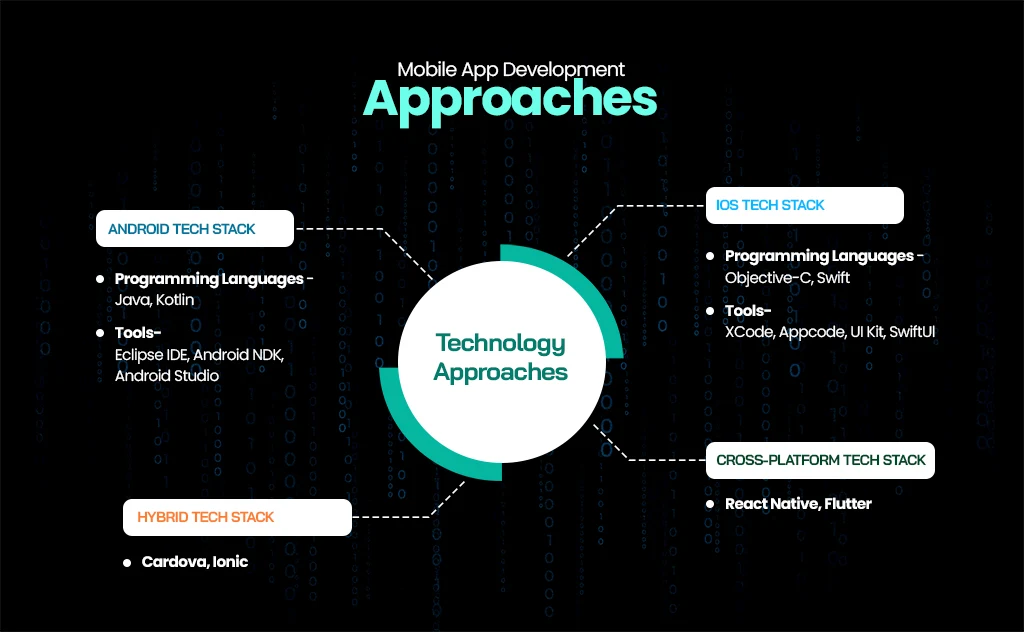
Choosing a reliable app development approach can have a big impact on both the mobile app development process and the performance of the app.
Before deciding how to design the custom mobile application, you need to understand how each strategy affects the app development procedure.
The following are the most typical ways that can be employed during the app development process.
Native Apps (Android or iOS Separately)
Native app development focuses on managing programs that are particularly designed for Android or iOS, using platform-specific tools and programming languages.
This technology is great for enterprises that value speed, security, and uniform app design.
Benefits:- Optimize performance for each operating system.
- Inclusion of superior UI/UX, aligned with platform-specific designs.
- Allows better access to device hardware.
- Greater security and stability for large-scale applications.
- Longer app development process steps, as it requires a separate codebase.
- Higher development and maintenance costs.
- Requires specialized teams for Android and iOS separately.

Cross-Platform Apps (Flutter, React Native)
Cross-platform tools allow you to build apps with a shared codebase for both iOS and Android.
This approach works well for startups and mid-size businesses looking to reduce the time and cost needed during the process of developing an app.
Benefits:- Faster development using a single codebase.
- Lower initial cost when compared to native development.
- A consistent user experience across platforms.
- Simplified maintenance and updates.
- May face performance issues while integrating with other apps.
- Limited access to platform-specific APIs.
- UI/UX may not meet the expectations of users.
Hybrid Apps and PWAs (Progressive Web Apps)
Hybrid apps mean having a combination of web and native elements. This allows for maintaining the efficient mobile experience for users. It is a better choice if your need is to have the minimum feature requirements.
Benefits:- Lower development costs and quicker implementation.
- Web technology provides easier upgrades.
- Ideal for MVPs or apps with a big reach.
- Easy upgrades and dissemination without the need for app stores.
- Performance is compromised when compared to native or cross-platform solutions.
- PWAs are supported with limited offline capability.
- Inconsistent user experience on older devices and browsers.
These help in maintaining the mobile app development approaches, clear and focused on the different approaches.
Here is the quick comparison of all three:
| Approach | Key Benefits | Limitations | When to Choose |
| Native Apps | - Best performance - Smooth UI/UX - Full access to device features | - Higher development cost - Longer time to build separate Android & iOS apps | If speed, responsiveness, and UX are top priorities |
| Cross-Platform Apps | - Shared codebase - Faster to build - Cost-efficient for multiple platforms | - May not match native performance - Limited support for some device-specific features | If budget is limited and you want iOS & Android apps quickly |
| Hybrid Apps & PWAs | - Quick deployment - Web and mobile reach - Lower development effort | - Performance may lag - Limited offline functionality | If you're building an MVP or a content-heavy app with lower interactivity |
Key Technologies Used in App Development Workflow
Understanding the tools used during the mobile app development process can help you align the technical and project needs more accurately. Each stage of the app development workflow requires specific tools to ensure quality, speed, and reliability.
UI/UX Tools Used in the App Building Process
Designing as per the user experience is the first step in the process of developing an app. Tool like:
- Figma: Enables real-time collaboration for wireframes and prototypes.
- Adobe XD: A tool for creating interactive and efficient app interfaces.
These tools are important when the mobile app development process steps have just been started.
Development Frameworks for Faster App Development
Once the design is complete, developers will start with the coding using a different framework that is suitable for your app. Popular options include:
- Flutter: A cross-platform framework that is suitable for both Android and iOS
- Kotlin: More preferred for native Android app development
- Swift: Used for native iOS app development
These technologies maintain the streamlined mobile app development process and reduce time to market.
Testing Tools in the Mobile App Development Workflow
To ensure that the app functions as expected, thorough testing is necessary. Tools that support this phase include:
- BrowserStack: Allows real-device testing across various platforms
- Appium: An open-source test automation tool for mobile applications
Testing is a critical step in the mobile app development process to detect and resolve bugs early.
Backend Technologies Supporting the App Development Process
The backend enables data management, authentication, and business logic. Common tools include:
- Firebase: Offers support for cloud storage, authentication, and real-time database support
- Node.js: Enables scalable backend services using JavaScript
These backend tools help you to complete the app building process and maintain the smooth functionality after launch.
Factors That Influence App Development Time and Cost
The app development process varies depending on various factors, such as the type of app or the need for features. These have a direct impact on the mobile app development cycle and how much it costs to develop an app.
Understanding these variables can help you plan better and avoid unexpected delays or overspending.
App Complexity (Simple, Medium, Complex)
The more complex your app is, the longer it takes to develop and costs high.
- Simple App: These include basic features like login, form submission, or a simple info display.
- Time - 1-3 months
- Cost - $8,000 - $25,000
- Medium App: Apps with user accounts, payments, geolocations, or API integration.
- Time - 3-6 months
- Cost - $25,000 - $60,000
- Complex Apps: Feature-rich apps like social networks, multi-sided marketplaces, or custom CRMs.
- Time - 6-12 months
- Cost - $60,000 - $200,000
A basic to-do list app can be done in 1 month, while a ride-sharing app may take a year or more.
Feature List and Third-Party Integrations
The type of app and the number of required features significantly impact the mobile app development process steps.
If your app requires the addition of third-party services such as payment gateways or analytics tools increases effort and cost.
- Basic Features - Login, push notifications, basic user profiles
- Advanced Features - Video streaming, real-time chat, data encryption
- Integrations - Stripe for payment, maps, social logins
Development Approach and Team Location
How you build the app and where your team is located also affect time and cost.
- Native App Development - High performance, longer time
- Cross-platform Development - Faster to build, lower cost
- In-house Team - Higher hourly rate, full control
- Outsourced Team - Lower cost, proven talent pool
| Team Type | Estimated Cost (Medium App) | Estimated Time |
| US/UK In-house | $80,000 - $150,000 | 4 - 7 months |
| Offshore Agency | $25,000 - $60,000 | 3 - 6 months |
| Freelancers | $15,000 - $40,000 | 4 - 7 months |

Common Challenges in the App Building Process
The mobile app development process comes with various issues that can delay the progress and increase the cost.
Here are some frequent challenges and how they affect your app development workflow and strategy:
1. Unexpected Delays
Issues like bugs, miscommunication, or scope changes can push the timelines. Even small issues can lead to reworking on design, development, and testing processes.
2. Feature Creep
Adding extra features beyond the initial discussion of the scope can have an impact on the delivery time and cost. While it may seem like added value, unplanned feature requirements and the need for extra planning, coding, and testing.
3. App Store Rejections
If the app does not meet Apple and Google’s submission guidelines, then it can lead to rejection. So each resubmission adds review time and delays the launch.
4. User Acquisition Difficulties
Launching the app is just the beginning. Many apps struggle to attract users even when developed with all practices. It requires a solid marketing strategy, budget, or defined user perceptions.
These challenges highlight the need for a structured and flexible approach in the app building process. Working with an experienced development team will help you resolve the issues early.
Building an App That Supports Your Business Growth
Turning your app idea into a working platform involves more than just development. From selecting the right feature to managing the time and budget, all play an important role in the mobile app development process.
Whether you are building a small app or managing an existing custom application, having an experienced tech partner can significantly reduce risks, increase the speed of development, and ensure that your app is ready for launch after testing.
If you are looking for reliable mobile app development services, we can help you with building an app that meets your business goals and user expectations. Our team is more specialized in custom Android and iOS development and offers constant support to keep your app running smoothly.
Let’s connect and turn your app idea into a high-performing solution.