Responsive Websites and their Importance?
Before diving deeper into the phases of web development, we earlier mentioned responsive websites. What are they? Why are they Important? A responsive website is the one that automatically scales its elements and content as per the screen sizes on which it is operated. The ultimate goal of a responsive website is to eliminate the unnecessary hassle of scrolling, resizing, panning, or zooming that occurs when the websites are not optimized for different screen sizes. A responsive website is essential because it may cost you potential and long-term customers if your website is not optimized for different screen sizes. In addition, they may get frustrated with trying to figure out what they are looking for. Hence, it is crucial to develop a responsive website for the growth of your customer base.Why should you invest in Building Responsive Websites?
The latest trends suggest that it is a wise decision to keep in mind both desktop and mobile visitors. The number of mobile visitors is now greater than desktop visitors, and this will continue to grow over time. Hence, here are the following reasons why you should invest in Responsive Websites:- Cost-effectiveness
- Flexibility
- SEO gains
- Ease of management
- Improved User experience
Key Stages of Website Development Process
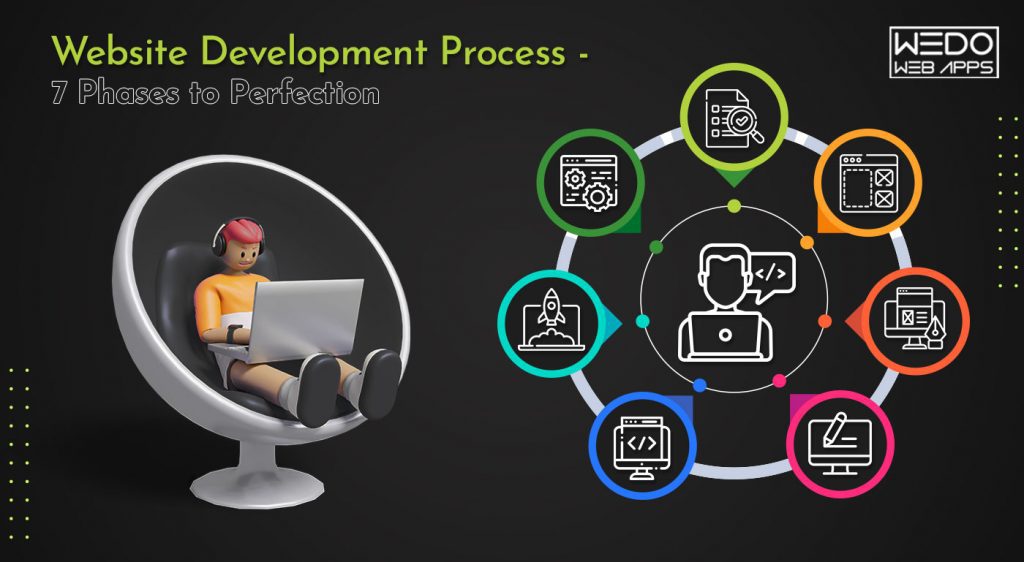
 Designing a website, an application, or any web-based product requires dedication, planning, and organization. A web development process incorporates different skills and disciplines to design and develop a functional website. Different stages of web development include graphic design, user interface design, user experience design, coding, and search engine optimization. In short, it is a step-by-step process to develop a responsive website. Following are the steps that will help you understand the overall design process:
Step 1: Requirement Gathering
Requirement gathering is one of the most important steps of the overall development process. Understanding the scope, expectations, and available resources makes both the developer and the customer ready for future success. This is important because any type of business should be started with the aim of a win-win situation for both parties. There are a few types of requirements you should keep in mind during this step: > Technical Requirement: While gathering the project requirements, think of every technical aspect related to it. Domain Name, Web Hosting, CMS, and email should be the primary requirements and each priced accordingly. If the client is not educated about the technical stuff, offer them to do it with their company credit card. > Provide a Rough Estimate: Once you have gathered all the technical requirements, you should have an approximation of the 10% of the entire fee in your mind. Remember, when you tell the customer your estimate, they will try to convince you for low prices. In that case, either convince them to scale down the project size or reduce any specific functionality that costs higher. Do not get convinced or go below your basic fee.Step 2: Proposal
Formalizing things is essential. Call it a contract, estimate, proposal, or anything else, but it is vital to have a document. The fact is to have a document for both the developer and the client to understand what is being delivered under the estimated timeline and price. A proposal is also helpful in project management. It helps project managers understand the client's requirements to avoid any misconceptions during the development. A minimum project proposal should include an introduction of the project, expectations, sitemap and Wireframe, functionalities, development process, deadline, and fee.Step 3: Creating a Sitemap and Wireframe
A sitemap means creating your website's architecture and organization that features the pages, placement, and relationship with other website pages. It only includes the elements related to users and web crawlers. It includes defining and organizing web content that helps developers and designers dive deep into planning the look and functionality of each page. The Wireframe is the layout of each website page. It outlines all the elements from a headline to CTAs and subscription boxes. Typically web design companies create the Wireframe for both desktop and mobile versions. Creating a sitemap and Wireframe will enable you to plan the buyer's entire on-site journey, adjust the features and functionalities, and picture the final result.Step 4: Design
Now is the time for the most complex part. Once you have roughly sketched the sitemap and Wireframe, it is time to determine the look and feel of the website. Using the information gathered up to this point, you can plan to design your website's user interface to finalize your website's complete look. It would not be wrong to say that 90% of the website visitors bounce due to poor website design. This is where your final website look comes into play to ensure your online presence is consistent with all other website elements. The website designers will apply your company logo, preferred color palette, icons, images, and other elements to strengthen your website's look.Step 5: Content Creation
Done with creating the framework of the website? It's now the time to get started with the foundation of the web design process. Yes, that is content creation. If your website's front-end is captivating, then you can easily catch the attention of the visitors. If the content of your website is worthy and alluring, then you can easily retain the customers to make a purchase. Website content is the most value-adding website design trend in 2021 and will remain the same in the future as well. Apart from driving customers, it also boosts the website's visibility for search engine optimization. Hence, never try to ignore the content part if you want your design process to be smooth and effective.Step 6: Development
Finally, it is time for the developer to show the technical skills for building a functional website. This involves the actual website development It is bifurcated into two parts: front-end development and back-end development. Front-end Development - The designs made in the above stages are now transformed into the active elements of the website. For building a website, web developers integrate components and functions to the skeleton of the website using framework and development tools. HTML, CSS, and generally JavaScript are used by web developers to create a responsive website. However, if you want to stay with the competition, user-friendly mobile website development is also recommended. Back-end Development - This stage involves developing the actual features of the website. While the front-end designs the visual elements for the user side, the back-end codes the instructions to make all the elements function properly. This is the process of creating the server-side website, developing databases, coding the website logic, and integrating the client and server-side functions. If you are a non-technical person, it is highly recommended to avail of responsive website design services from an established website development company.7. AB testing/Pre-launch
Once the website is developed, it undergoes rigorous tests to eliminate any bugs present in the website. The QA testers repeatedly perform various tests like unit testing, load testing, and stress testing to ensure the website's compatibility, performance, usability, and functionality. Being a responsive web design company, our quality assurance testers perform testing of your website's usability and functionality across:- Cross-browser testing: Testing the website on the latest versions of the major search engines like Internet Explorer, Google Chrome, Safari, Firefox, and Edge
- Cross-device Testing: On multiple devices like PC (Mac and Windows), Mobile (Android and iOS), and tablets.
- Functional Testing: Repeatedly checking the features according to the requirements to ensure they are successfully met.